On November 27, lecturers from the Transport Logistics study program and students from groups TL23D-1, VM23D-1, and TL24I visited two companies in the Panevėžys region – UAB Schmitz Cargobull Baltic and UAB GTV Store, where they learned about modern semi-trailer manufacturing technologies and logistics processes in warehouses.
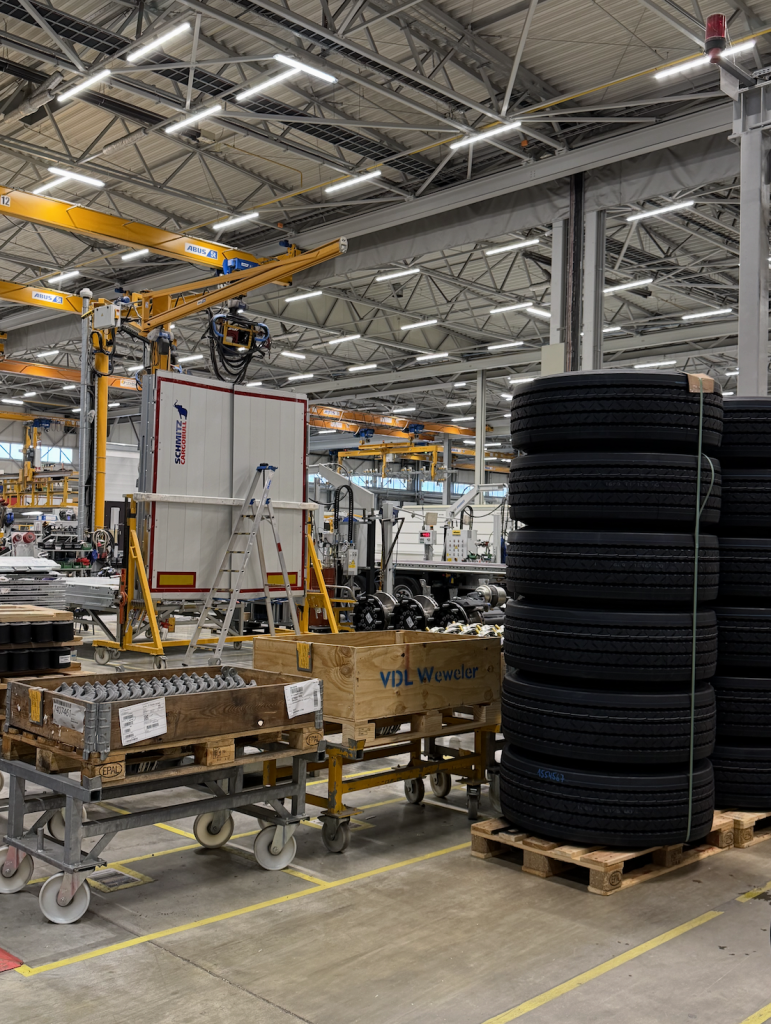
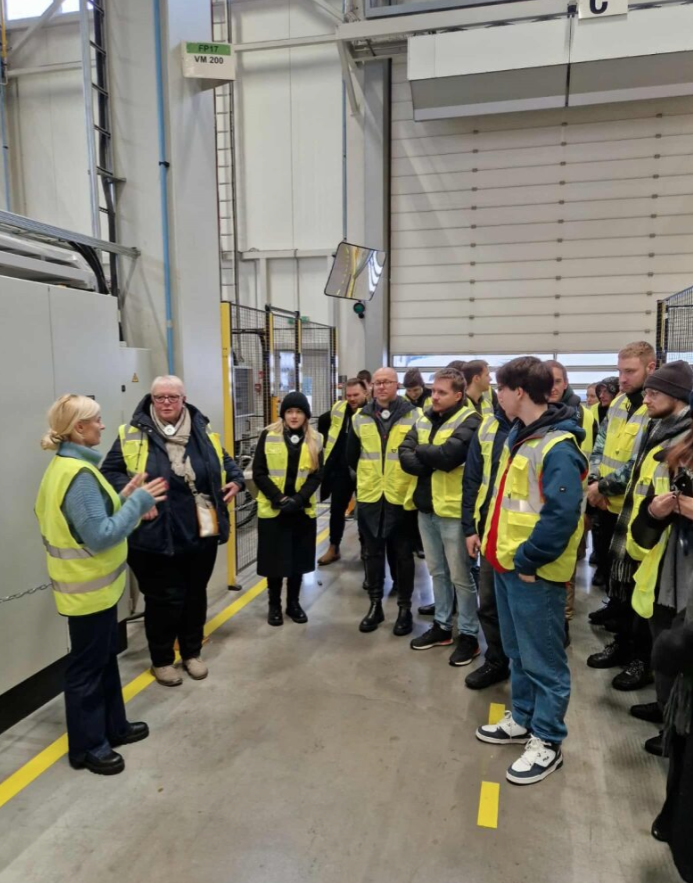
Representatives of UAB Schmitz Cargobull Baltic told the story of the Schmitz Cargobull Group, which has extensive experience in semi-trailer manufacturing and is a leader in Europe, and presented the stages of development of the Panevėžys-based division. The company uses advanced engineering and manufacturing technologies to create tarpaulin and isothermal bodies, trailers, and semi-trailers that meet high standards of quality and reliability, according to individual customer orders.
Students and teachers had the opportunity to observe the technological process of manufacturing FERROPLAST® thermal insulation panels and isothermal transport vehicles. Company representatives demonstrated and explained how semi-trailers, trailers, and interchangeable bodies are manufactured using modular systems. The participants of the trip had the opportunity to see the products manufactured by the company and ready for delivery to customers: curtain-sided, isothermal semi-trailers and semi-trailers for transporting refrigerated products. Responding to questions from students and teachers, representatives of UAB Schmitz Cargobull Baltic stated that maintaining high product quality is facilitated by the implemented quality management system, listening to customer needs, and constantly searching for new solutions in the field of vehicle manufacturing.
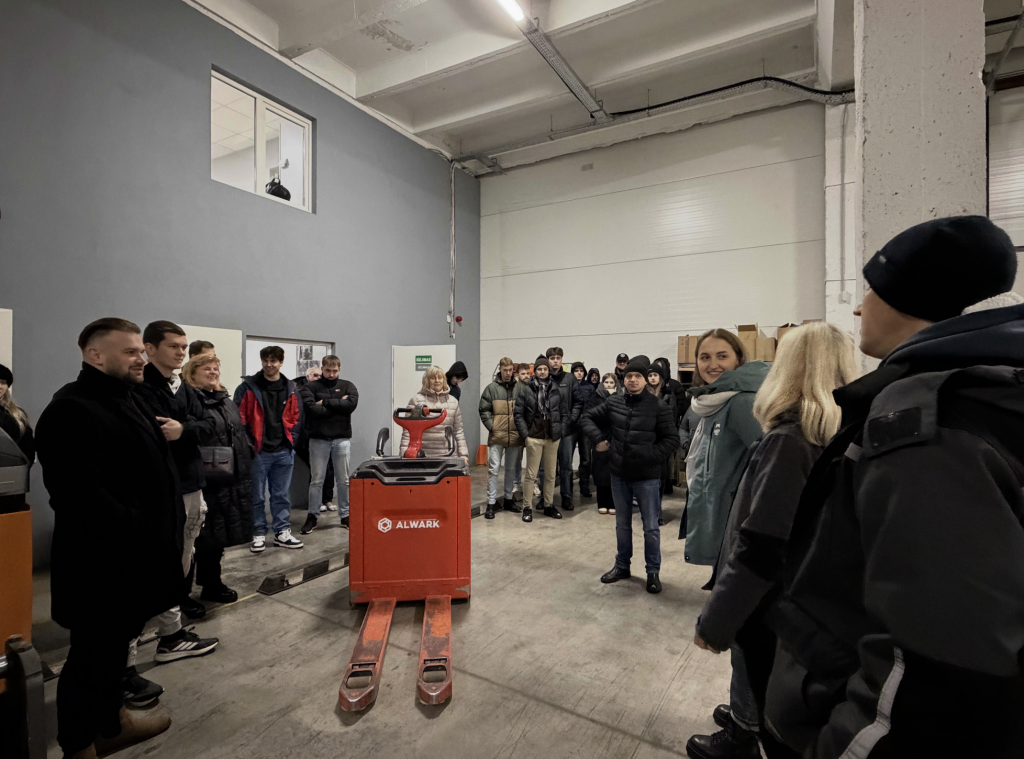
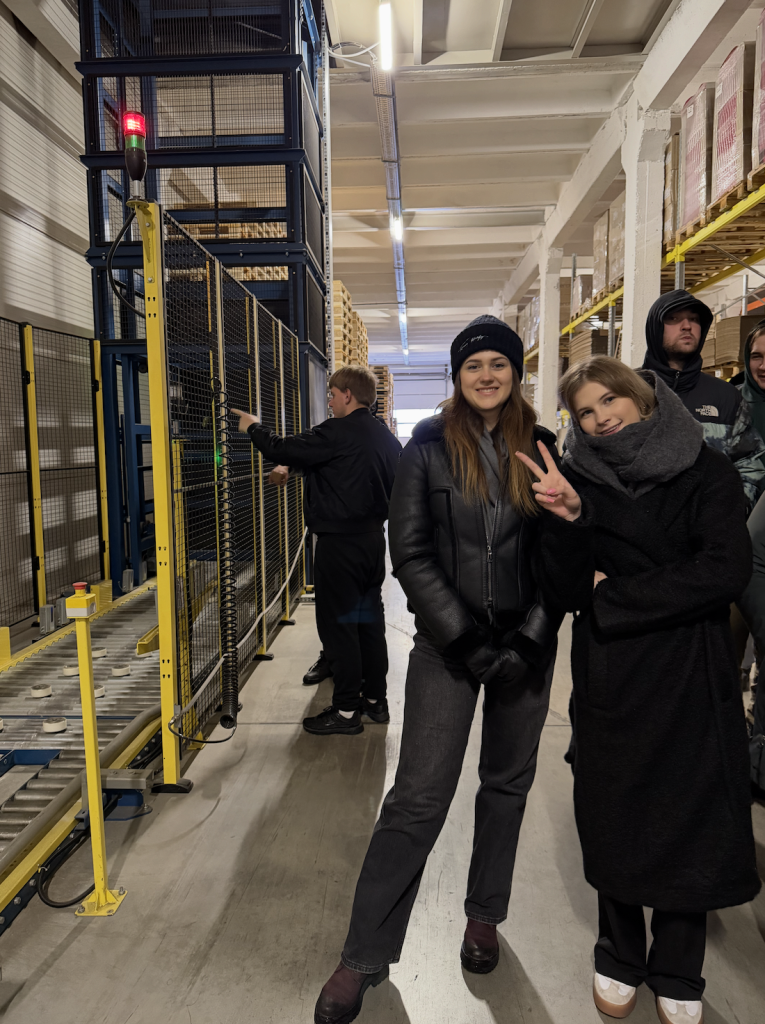
Representatives of UAB GTV Store presented the company, which operates according to the 3PL (Third Party Logistics) concept. This involves not only warehousing, but also the management of all supply chain processes – receiving, checking, weighing, labeling, forming shipments, and controlling inventory. The company is equipped with modern warehousing equipment – hydraulic ramps, a mezzanine racking system, freight elevators, and a warehouse management system. Accompanied by company representatives, the lecturers and students had the opportunity to observe the logistics processes in the warehouse and the processes taking place in the unloading and receiving areas. Company representatives gave a detailed account of the organization of the main warehouse processes (delivery, receipt, movement, storage, sorting, and selection of goods, and issuance of goods), as well as the problems that arise and how they are solved.
Company representatives answered students’ questions, willingly shared their insights on logistics challenges and effective warehousing practices, and presented new technologies that help increase process speed and accuracy. Through communication with company representatives, lecturers and students learned about the technological solutions used to achieve efficiency and the importance of cooperation between different links in the supply chain.
Such trips provide an opportunity to apply theoretical knowledge in practice by getting a close-up look at production and warehousing processes and the organization of company operations. The sincere desire of company representatives to share their experience inspires students to take an even greater interest in modern technologies, think outside the box, and strive for the best results in all areas.