From 2 to 11 September 2026, introductory work placement events were organised for first-year students on the Transport Logistics degree programme.
During the introductory lectures, Ina Stankaitienė, Vice-Dean of the Faculty of Construction, familiarised the first-year students with their chosen degree programme and specialism, their future working environment and the organisation of their studies. Aurelijus Vaškys, International Relations Coordinator, presented the opportunities offered by the ‘Erasmus+’ mobility programme. The students attended presentations by Gediminas Bražionis, Head of the Physical Education and Sports Centre at Vilnius College and basketball coach Gediminas Bražionis and the Head of the Career Centre, Beata Gervickaitė, on the activities of these centres, and met staff from the Faculty of Construction library, who explained the services provided by the library, outlined its operating procedures and introduced them to the information retrieval systems.
During the introductory work placement, lecturers from the Department of Sustainable Management – Danutė Puodžiukienė, Indrė Sprogytė-Bredelienė, Julius Gaidys and Irina Briuchoveckaja – organised meetings and seminars for the students with representatives of social partners, as well as educational excursions.
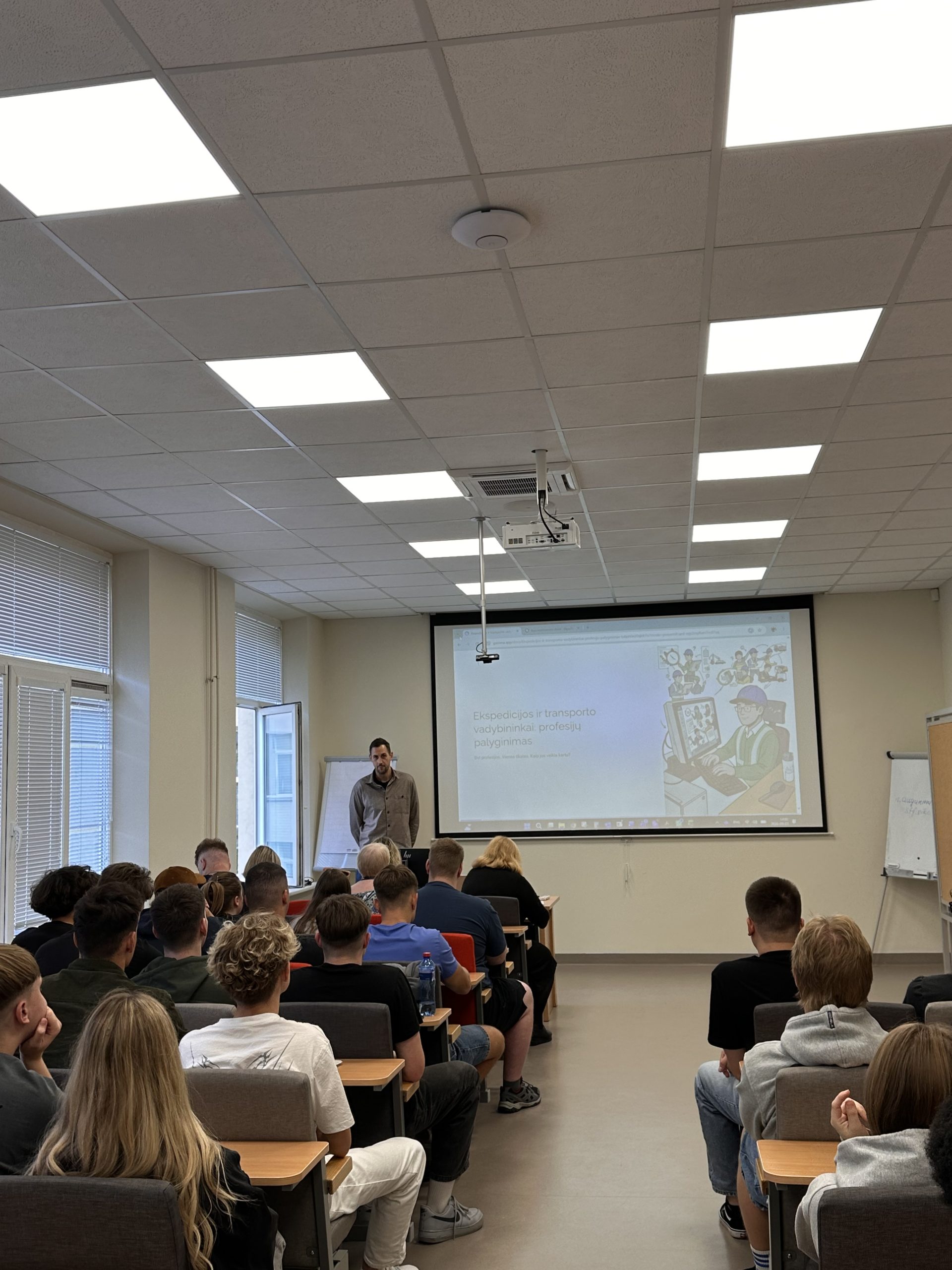
During the first week, students in the TL26A, TL26B and TL26S groups attended a lecture by Ignas Braziulis, a representative of UAB ‘Freitron’, entitled ‘A Comparison of the Professions of Freight Forwarding and Transport Managers’. During the lecture, students learnt about the differences between the professions of freight forwarding and transport managers: the session covered what a freight forwarding manager is, as opposed to a transport manager, the scope of their responsibilities, their main functions, and the tools and systems they use in their work. The session also examined how professionals in these two fields collaborate, as well as their career opportunities and salary prospects. Students were able to ask the company representative questions relevant to them anonymously.
The second week of the introductory work placement included educational excursions and guest lectures.
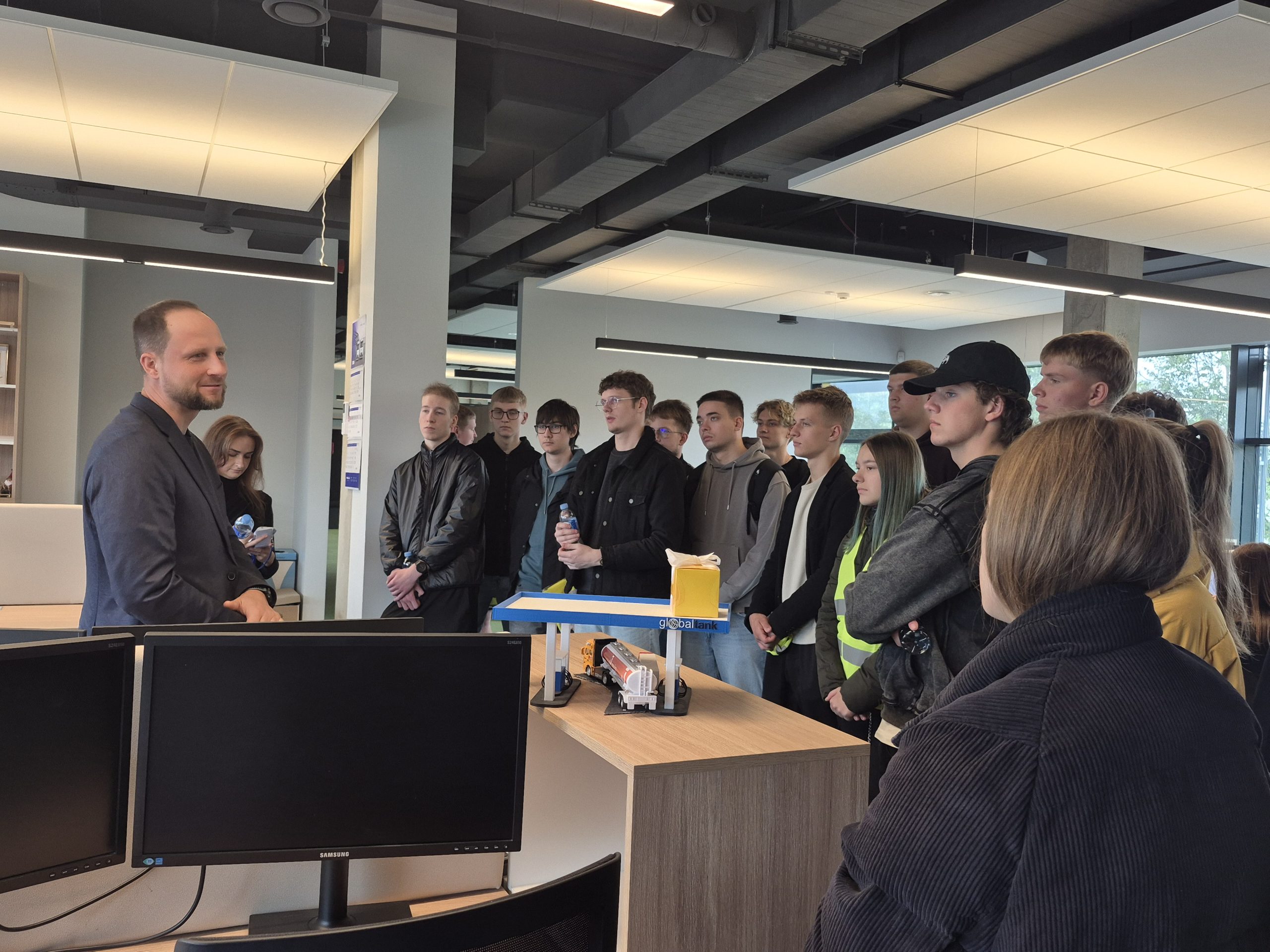
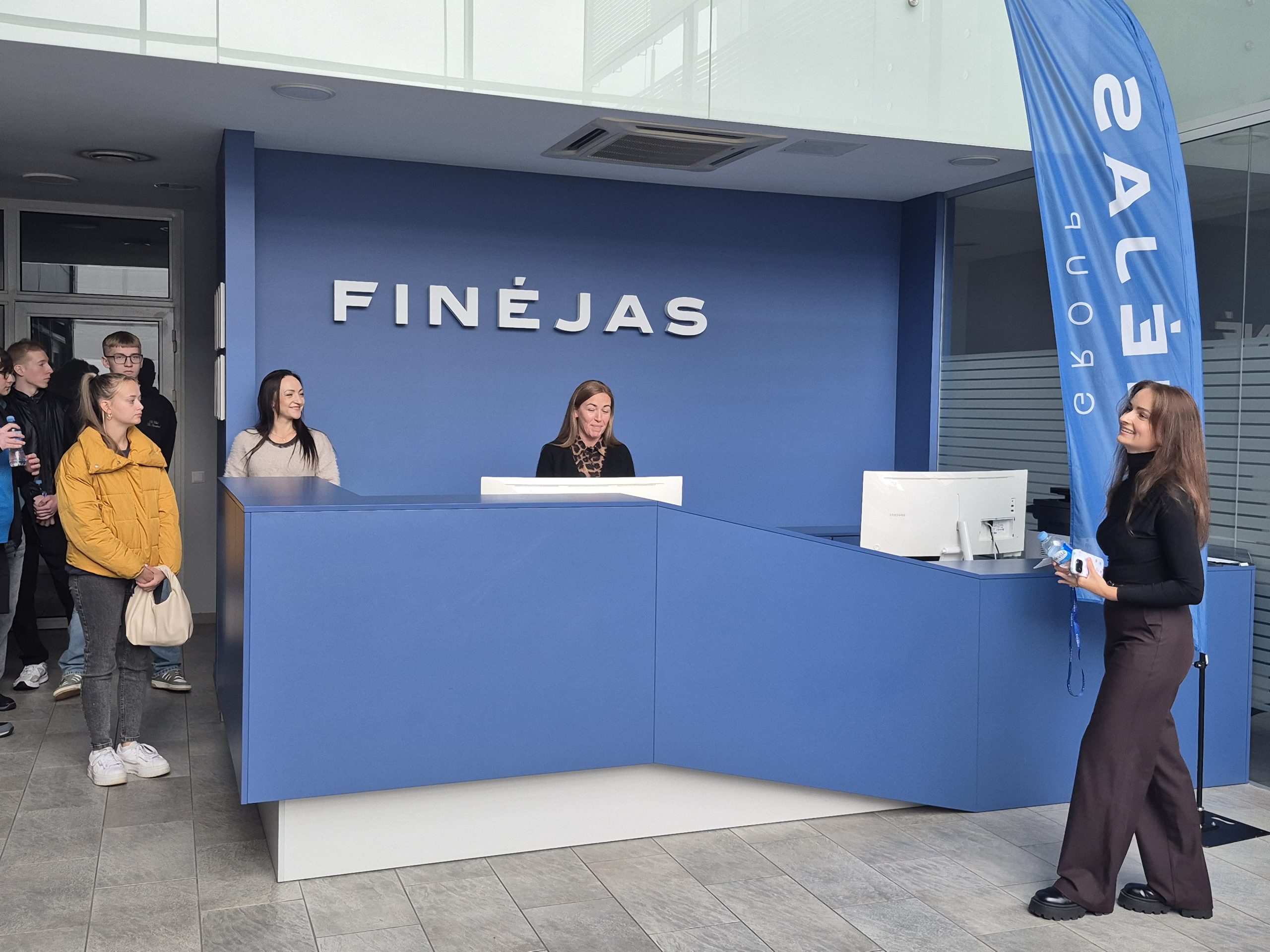
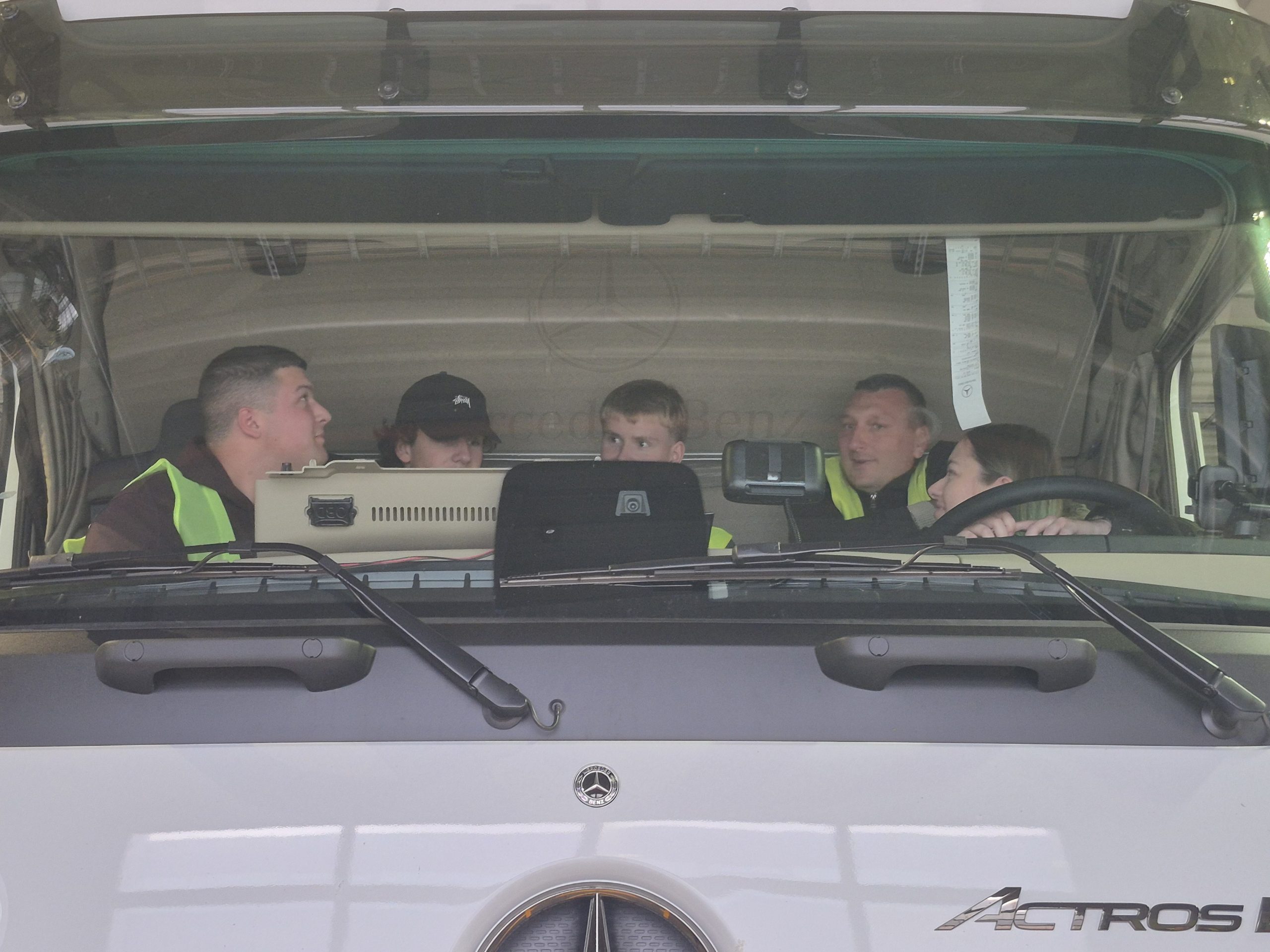
On 7 September, first-year students from Group TL26A of the Transport and Logistics degree programme visited UAB ‘Finėjas’, where an educational tour was organised for them by Erika Kožikienė, HR Project Manager. The students found the HR representative’s talk on the specific features of working in the transport sector, the essential skills required of specialists in this field, and recruitment and career opportunities particularly interesting. The students were also captivated by the transport manager’s account of the challenges and problems encountered in day-to-day managerial work. The internship participants were presented with specific examples of teamwork involved in making various decisions. Later, the students had the opportunity to familiarise themselves with the activities of all the company’s departments, ask questions and discuss matters with company staff. The visit to the company’s repair workshop generated a great deal of interest, as the students were able to observe the design features of lorries and semi-trailers at close quarters and listen to the department manager’s account of the specific operational requirements of the company’s electric lorries.
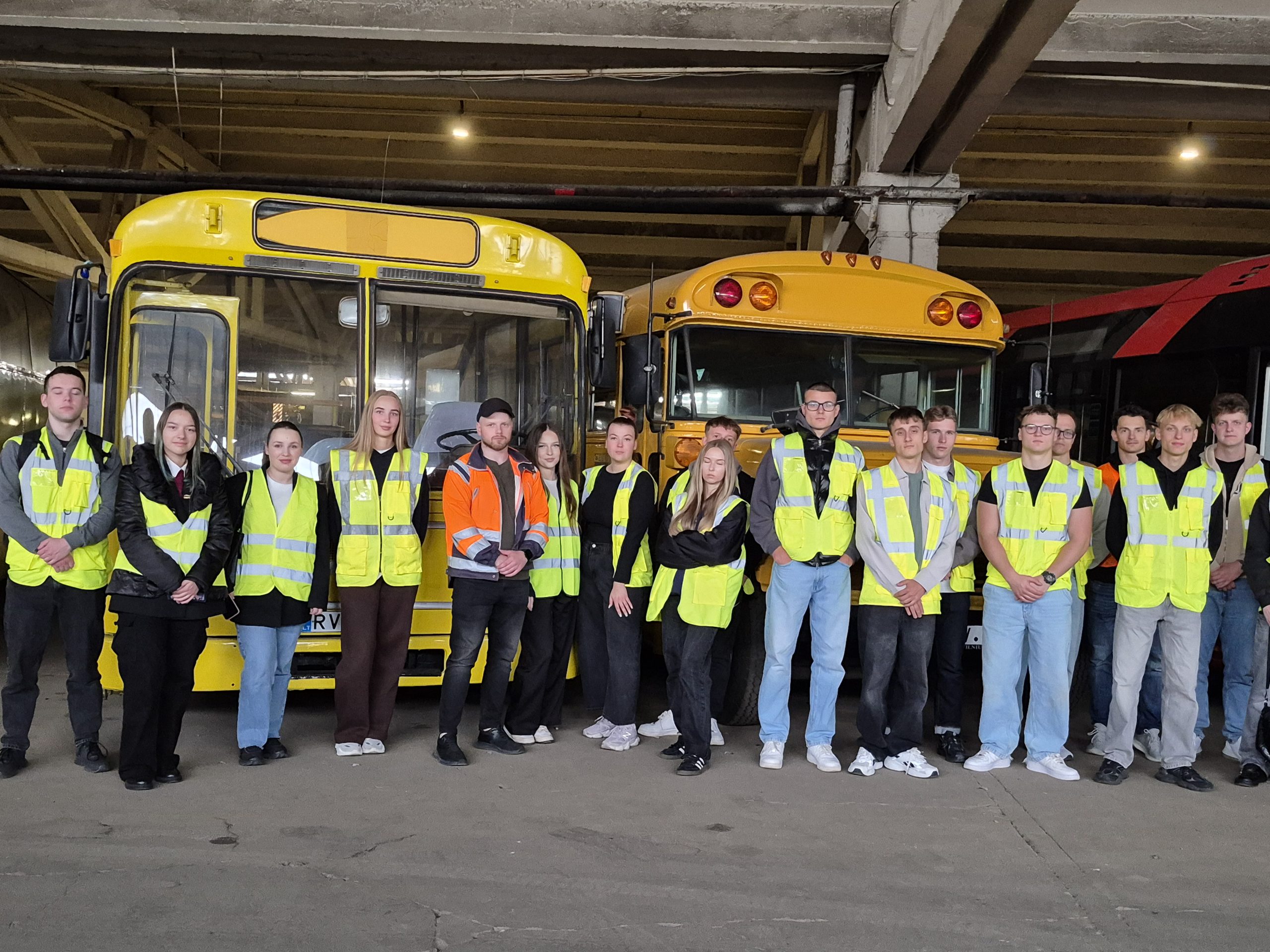
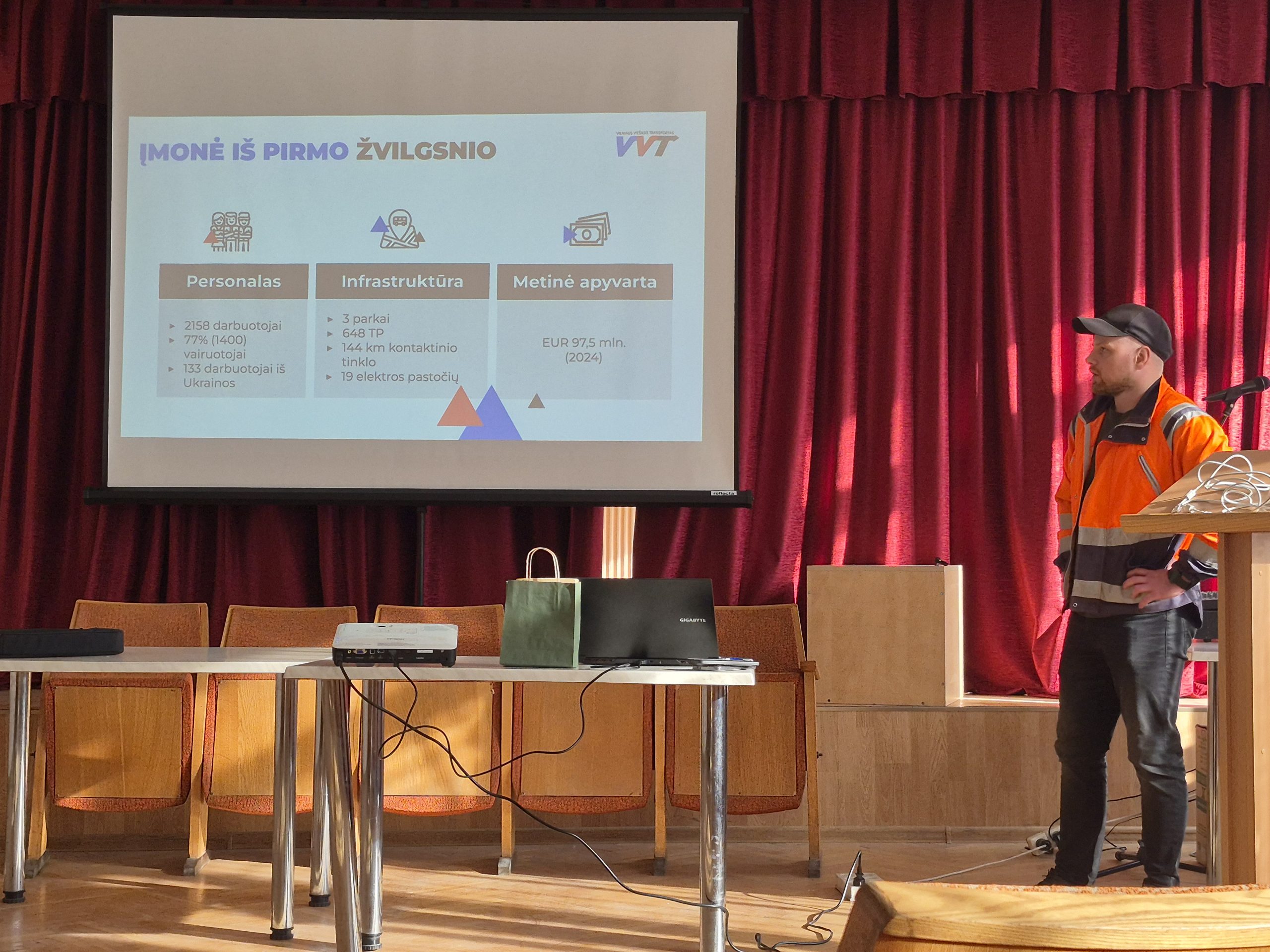
On 8 September, first-year students from group TL26S on the Transport Logistics degree programme visited UAB ‘Vilniaus viešasis transportas’. Rytis Engelaitis, Project Manager of the Traffic Services Department, presented the company’s history, its fleet of vehicles and the range of services it provides, and analysed the routes and timetables of buses, trolleybuses and ferries, as well as passenger numbers. The students had the opportunity to tour the bus depot, hear about how vehicles are prepared overnight for the following day’s service, and learn about the specific aspects of the work carried out in the bus inspection and repair workshops. The Traffic Services project manager answered all the students’ questions, shared his experience, gave examples of problems that arise and explained how these problems are resolved, as well as the key skills required to tackle them.
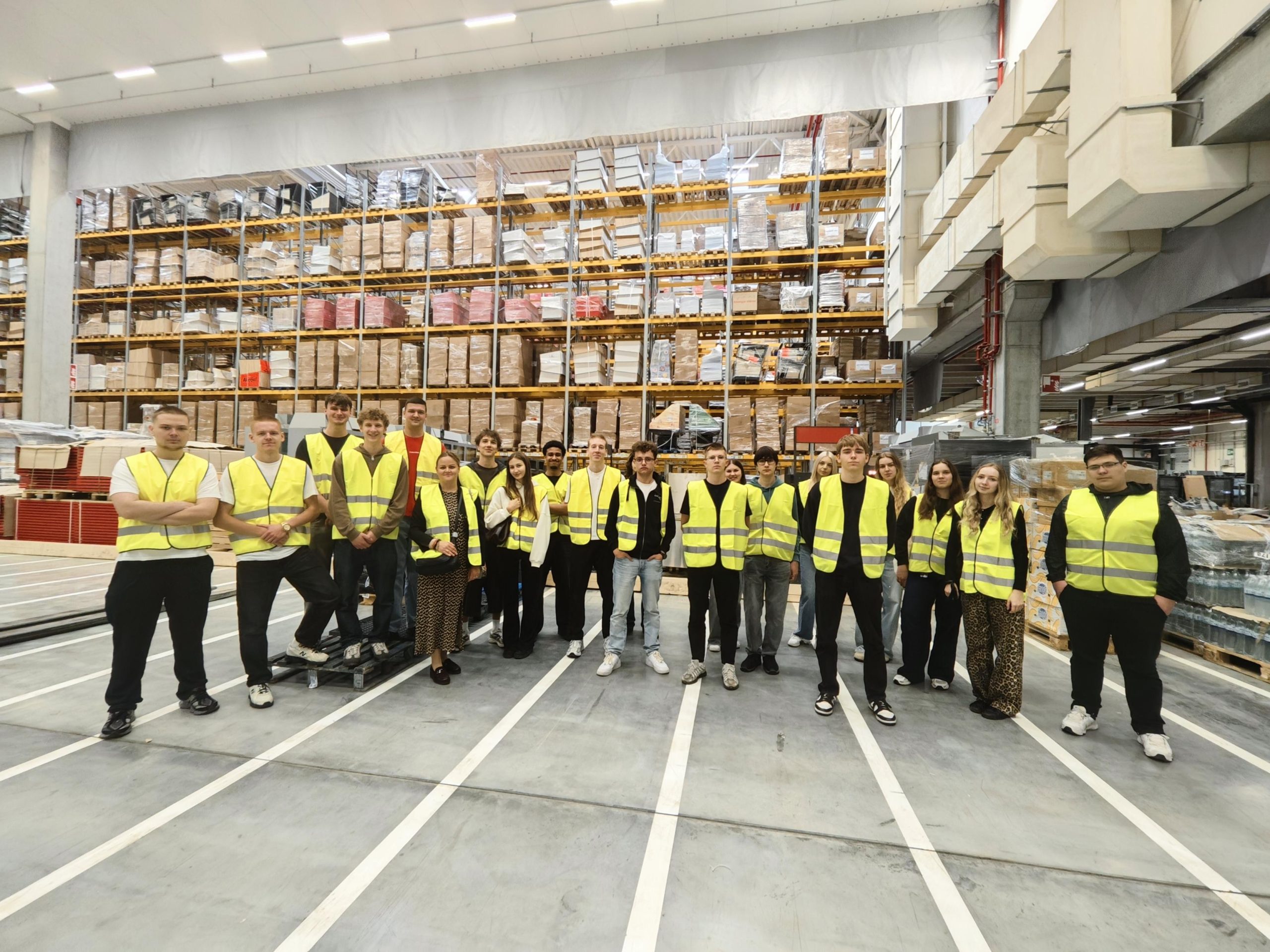
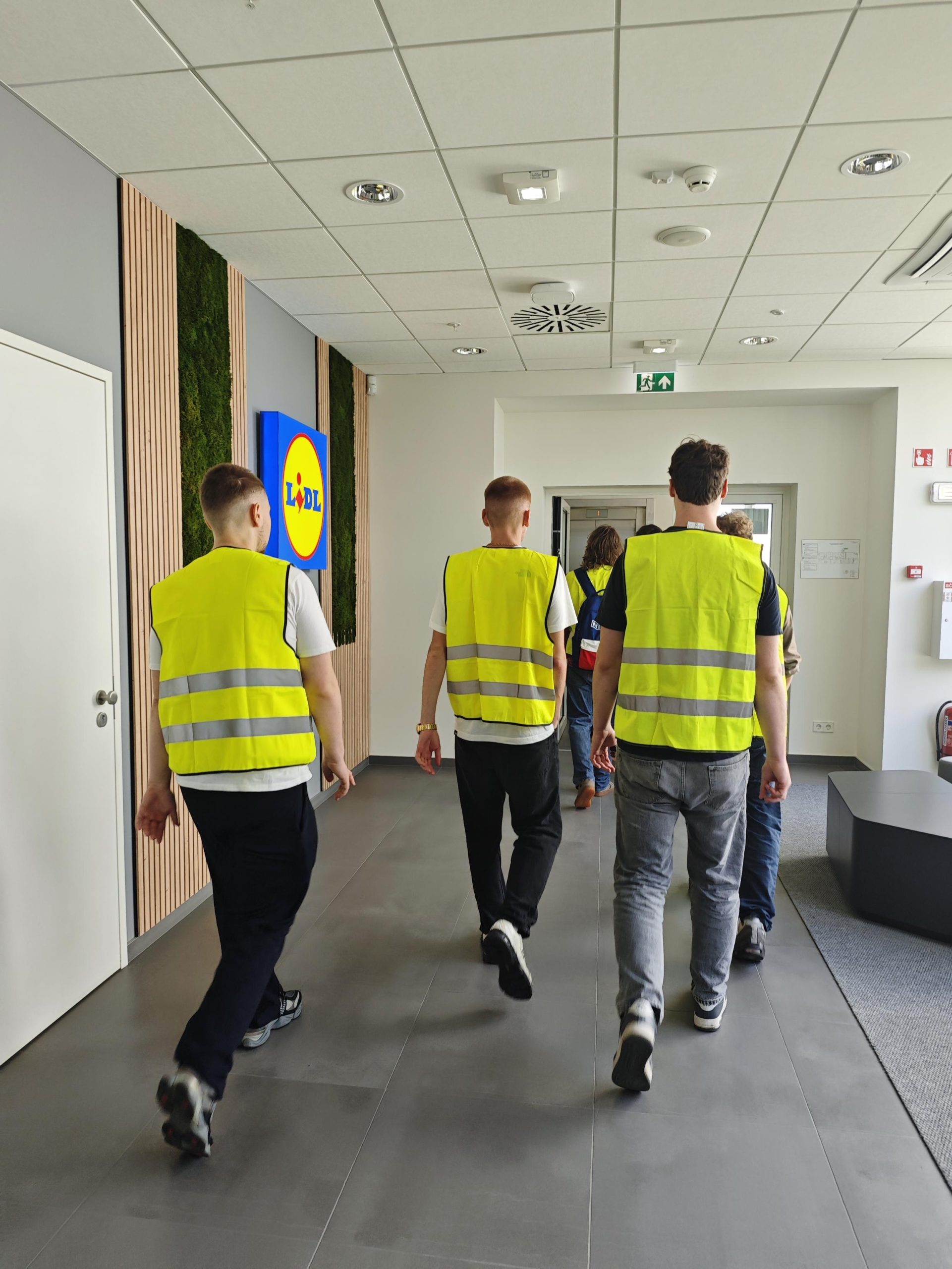
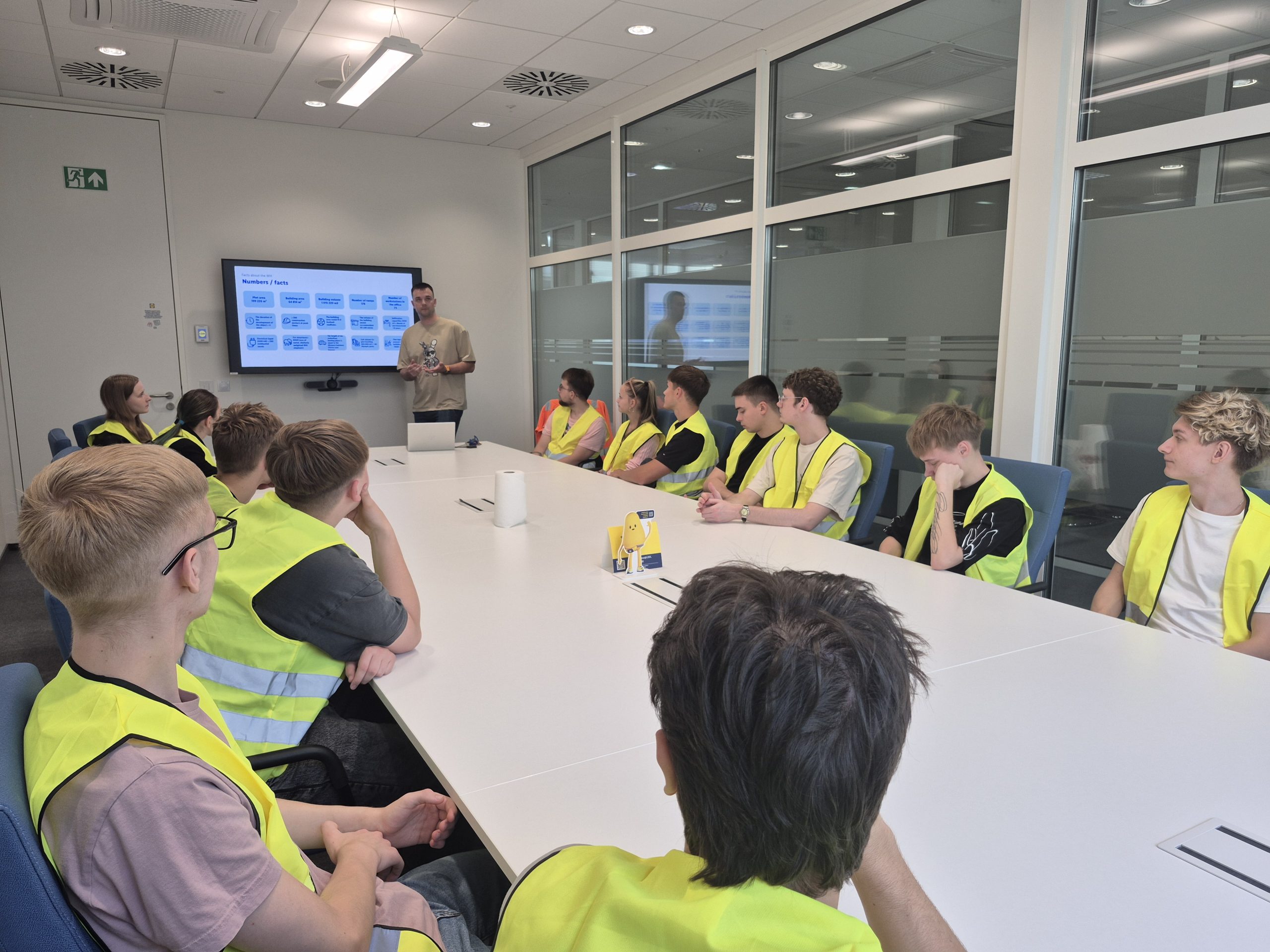
On 8 September, students from Sub-group 2 of Group TL26A, first-year students on the Transport and Logistics degree programme, and on 9 September, students from Sub-group 1 of Group TL26A, visited the logistics centre of UAB ‘LIDL Lietuva’. The head of the transport department and the warehouse manager presented the history of the company as a whole and that of the recently established logistics centre, outlined the stages of the company’s growth, set out its prospects for expansion, and told the students about the company’s day-to-day operations and the challenges faced by managers.
The students then had the opportunity to familiarise themselves with the equipment and technologies used at the logistics centre, as well as the processes taking place there: the receipt of goods into the warehouse, the storage of individual product groups, and the dispatch of goods. The students were particularly interested in the processes involved in handling returned goods and collected plastic packaging, and the company representative was happy to answer their questions and provide practical examples.
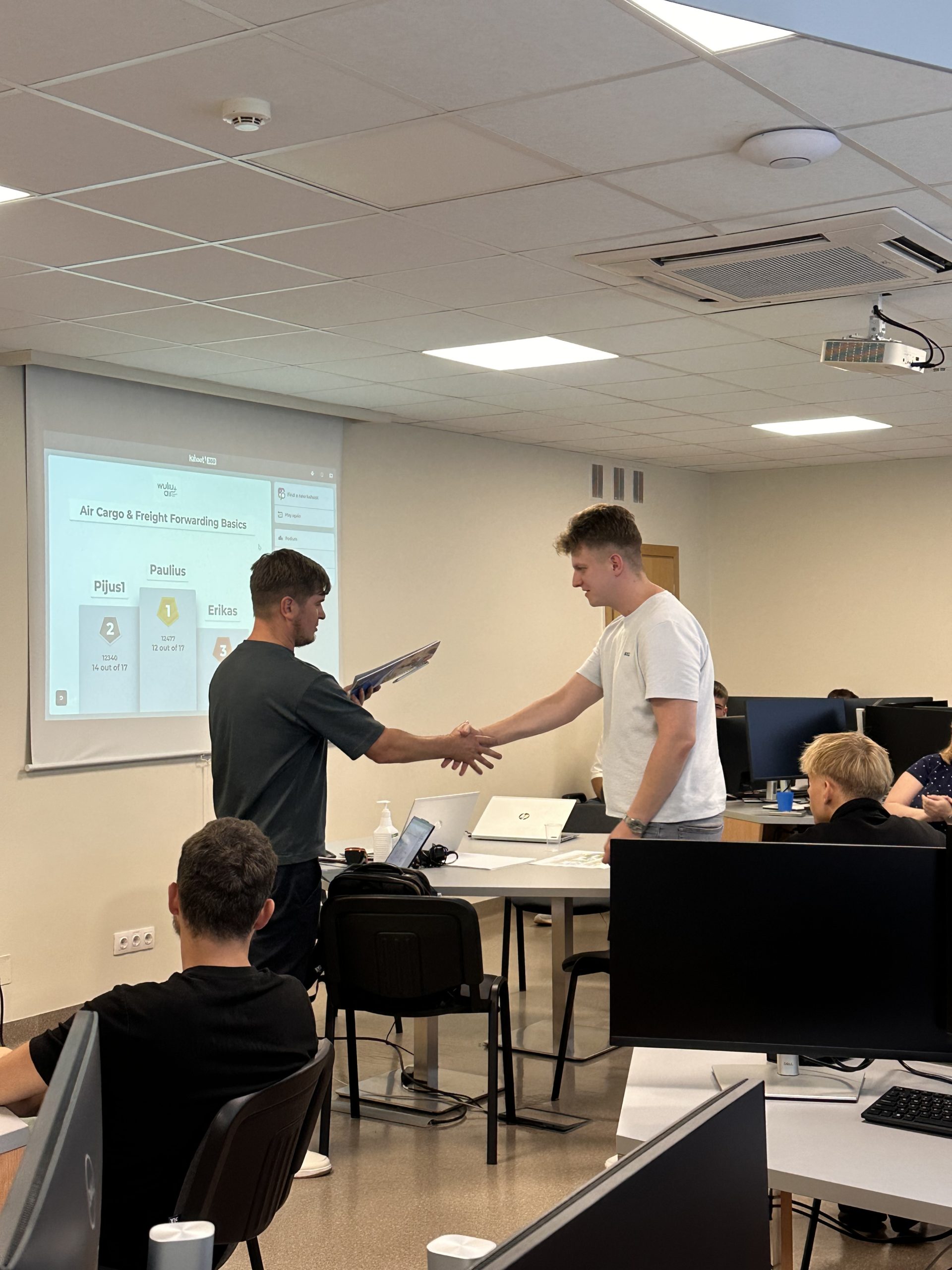
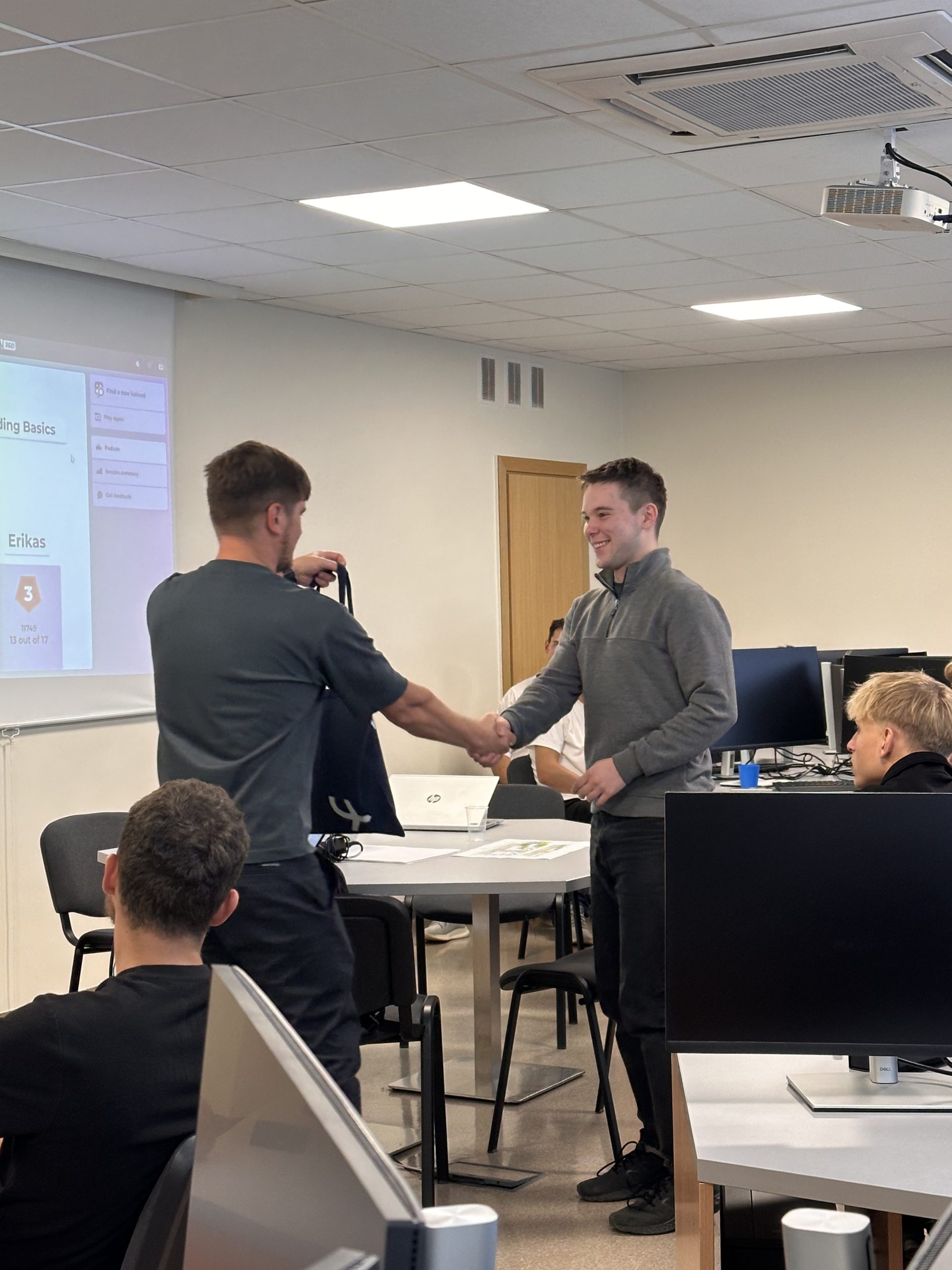
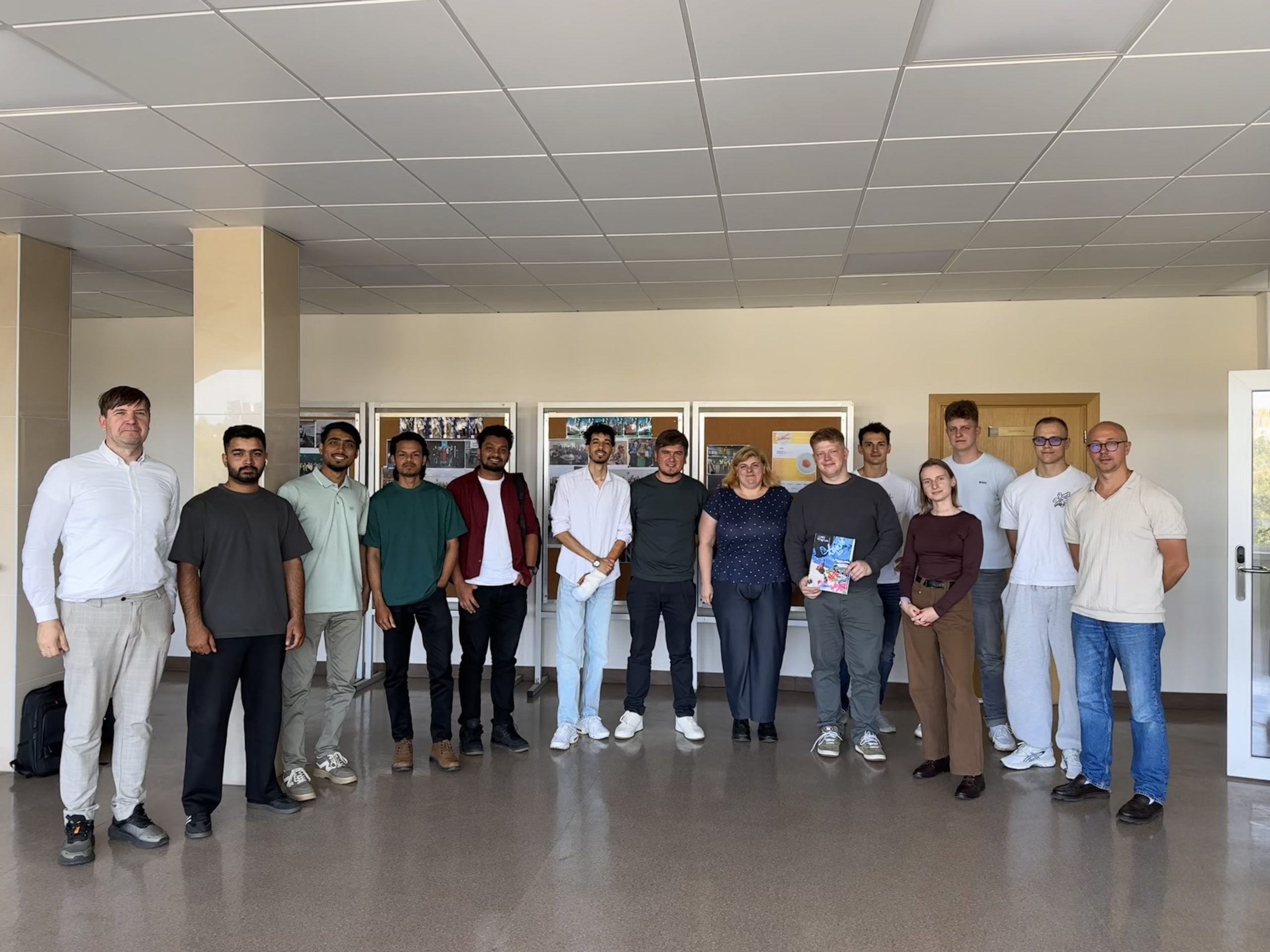
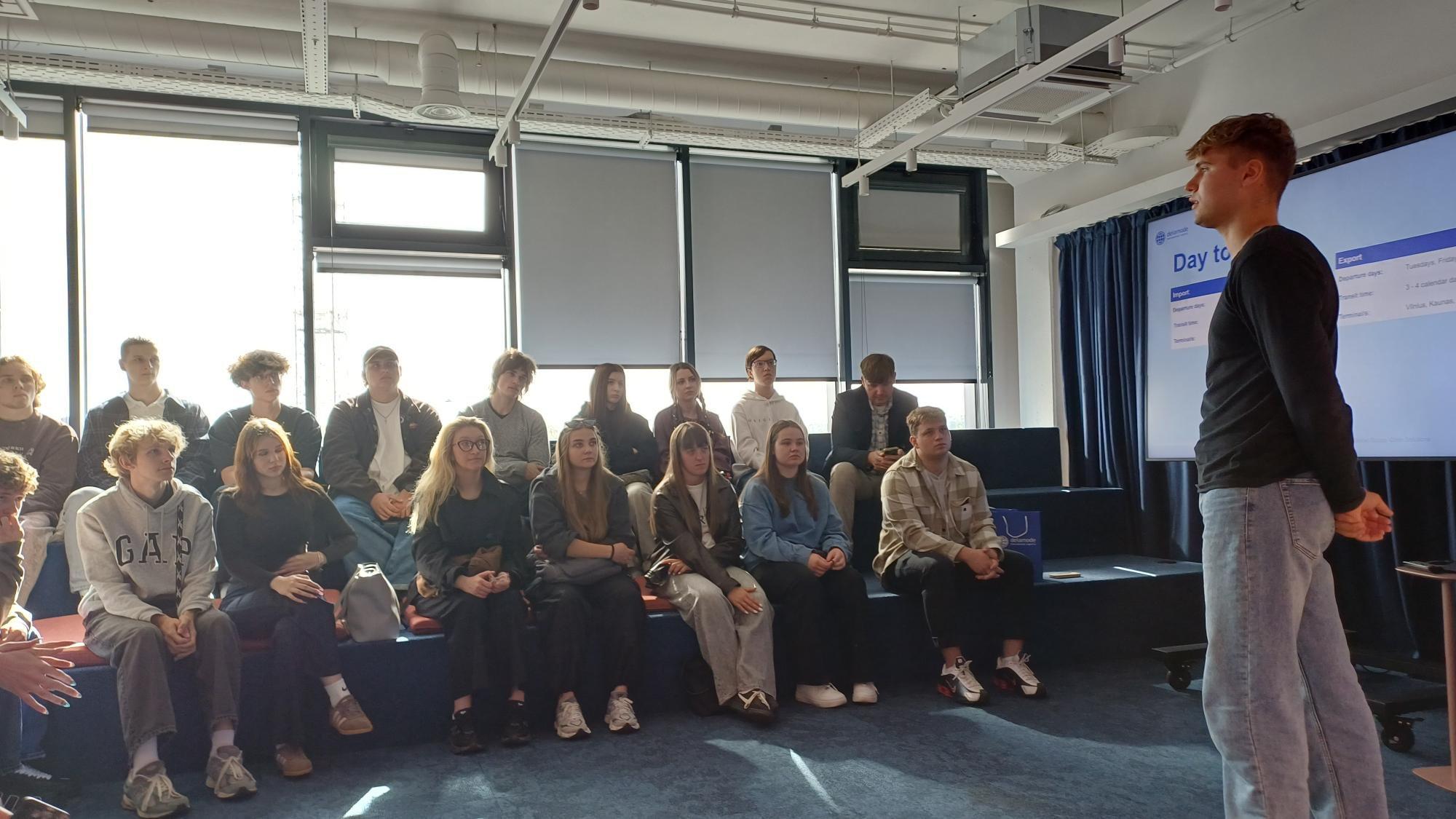
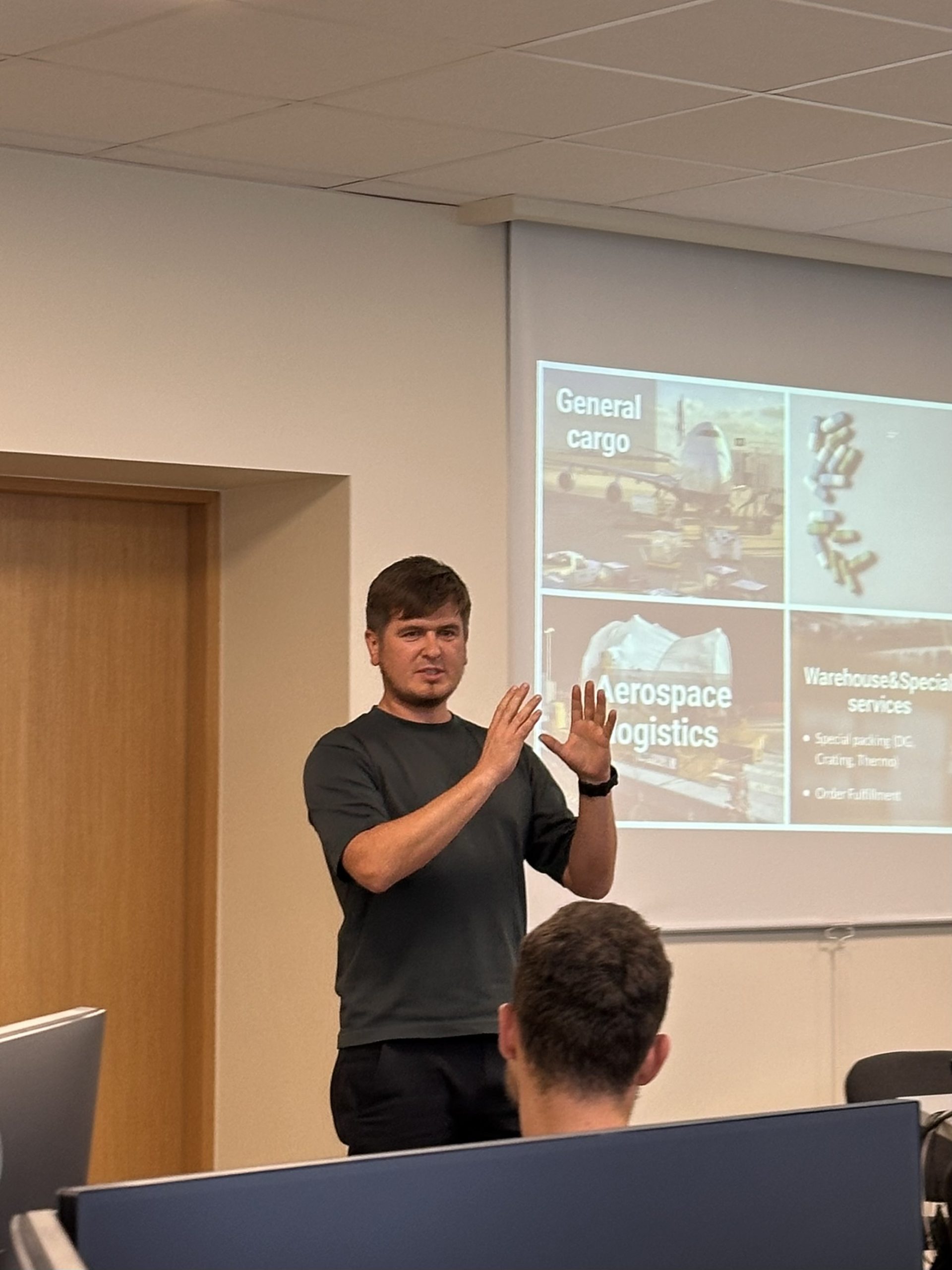
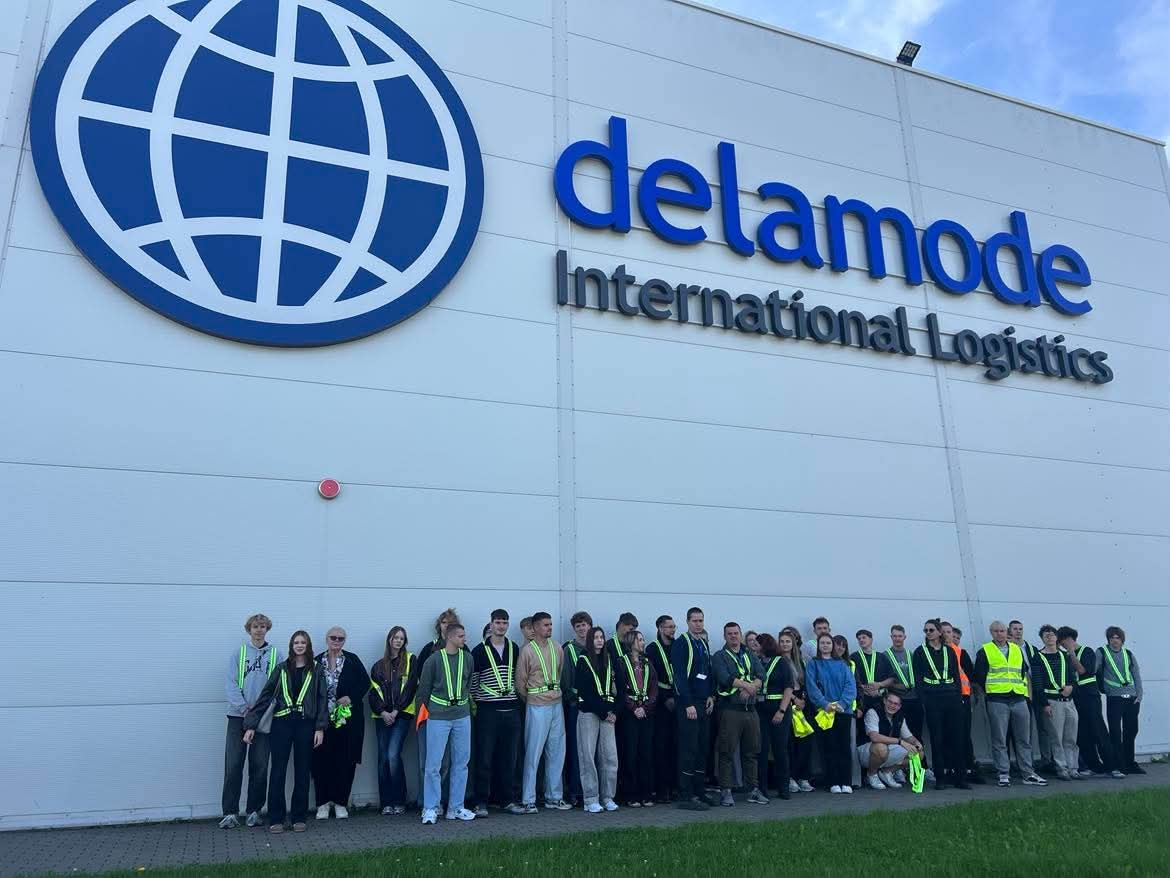
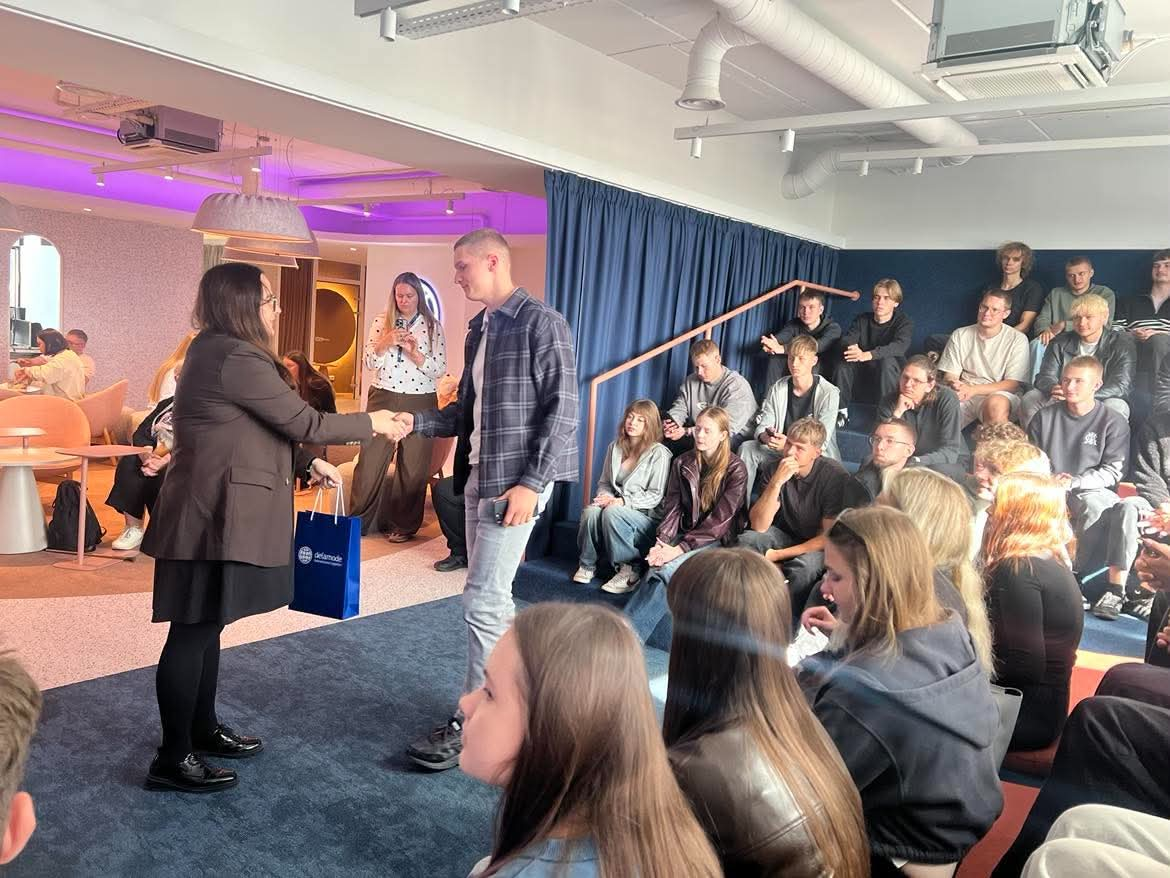
On 8 September, first-year students from Group TL26B of the Transport and Logistics degree programme visited the headquarters and logistics terminal of UAB ‘Delamode Baltics’. Adelė Ramelytė, HR Manager at UAB ‘Delamode Baltics’, presented the company’s activities and employment and work placement opportunities, and answered the students’ questions. The most active students were additionally rewarded with various gifts from UAB ‘Delamode Baltics’.
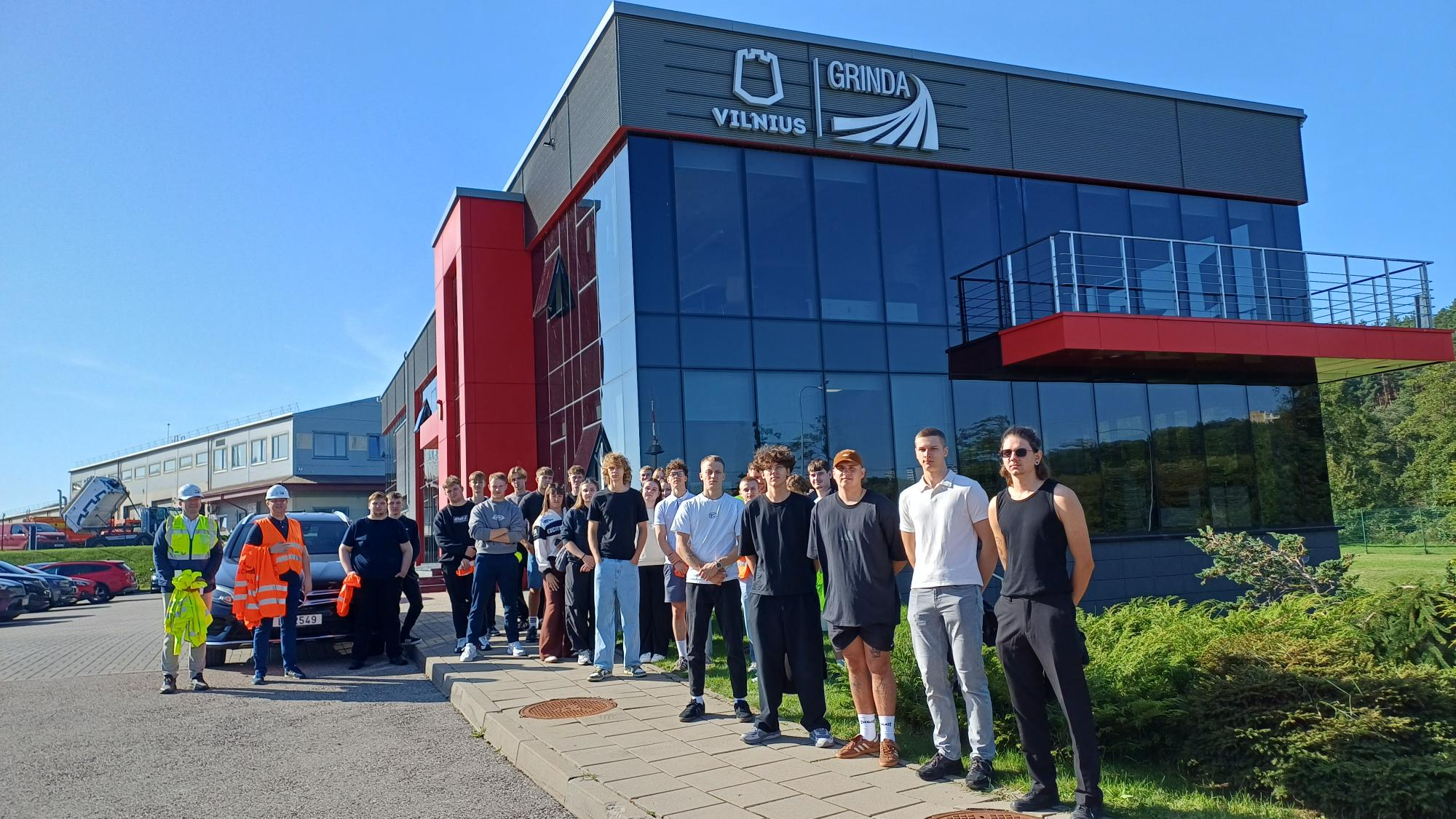
On 9 September, first-year students from group TL26B of the Transport and Logistics study programme visited the public services company UAB ‘Grinda’. Vytautas Lapinskas, Head of the IT Resources Department, presented the company’s activities, explained the specific functions carried out by the company, and organised a tour of the company’s premises, where he demonstrated various pieces of equipment used for urban maintenance, the road salt storage warehouses and explained how they work.
On 10 September, lectures were given by two guest speakers from the companies.
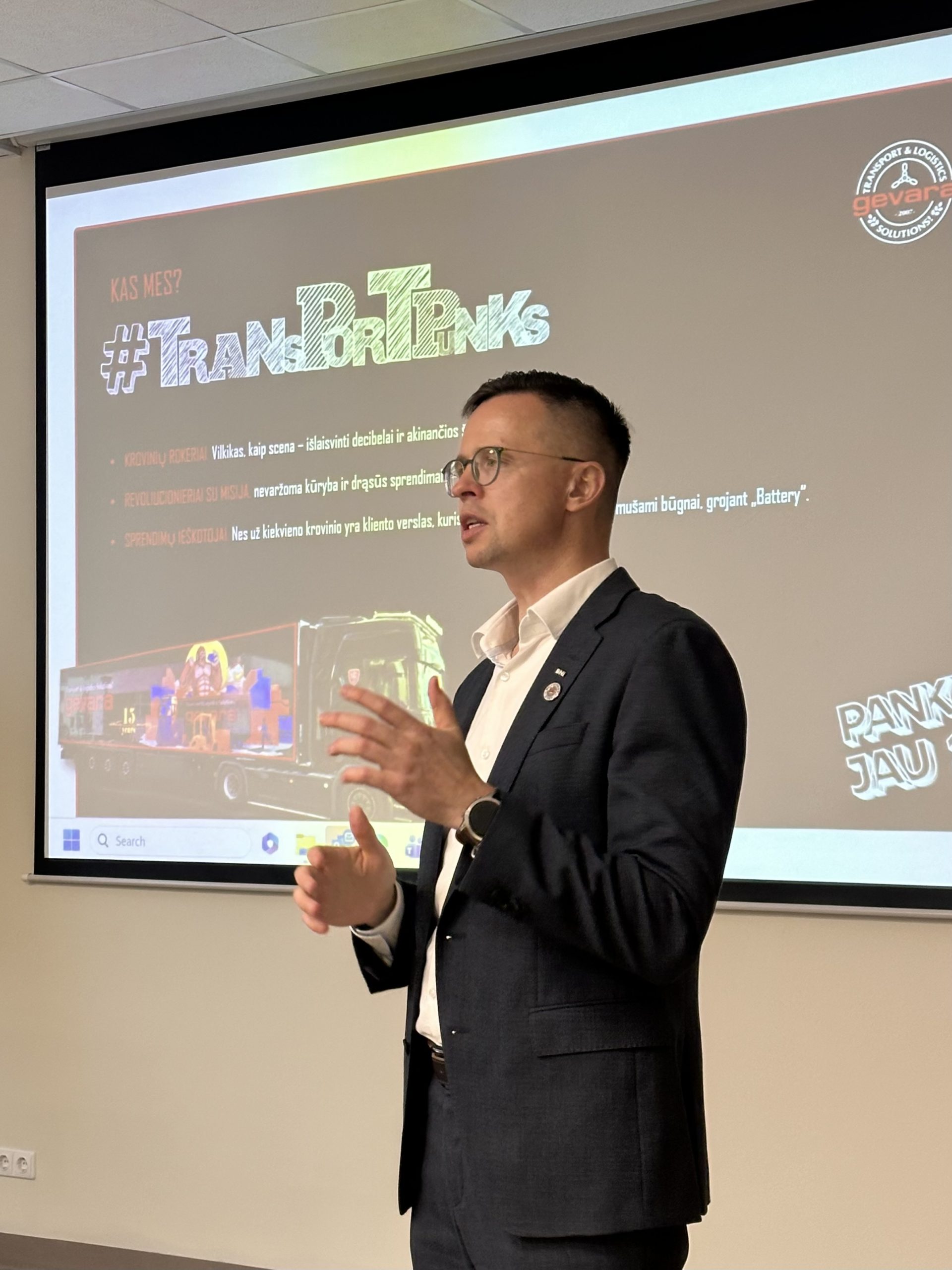
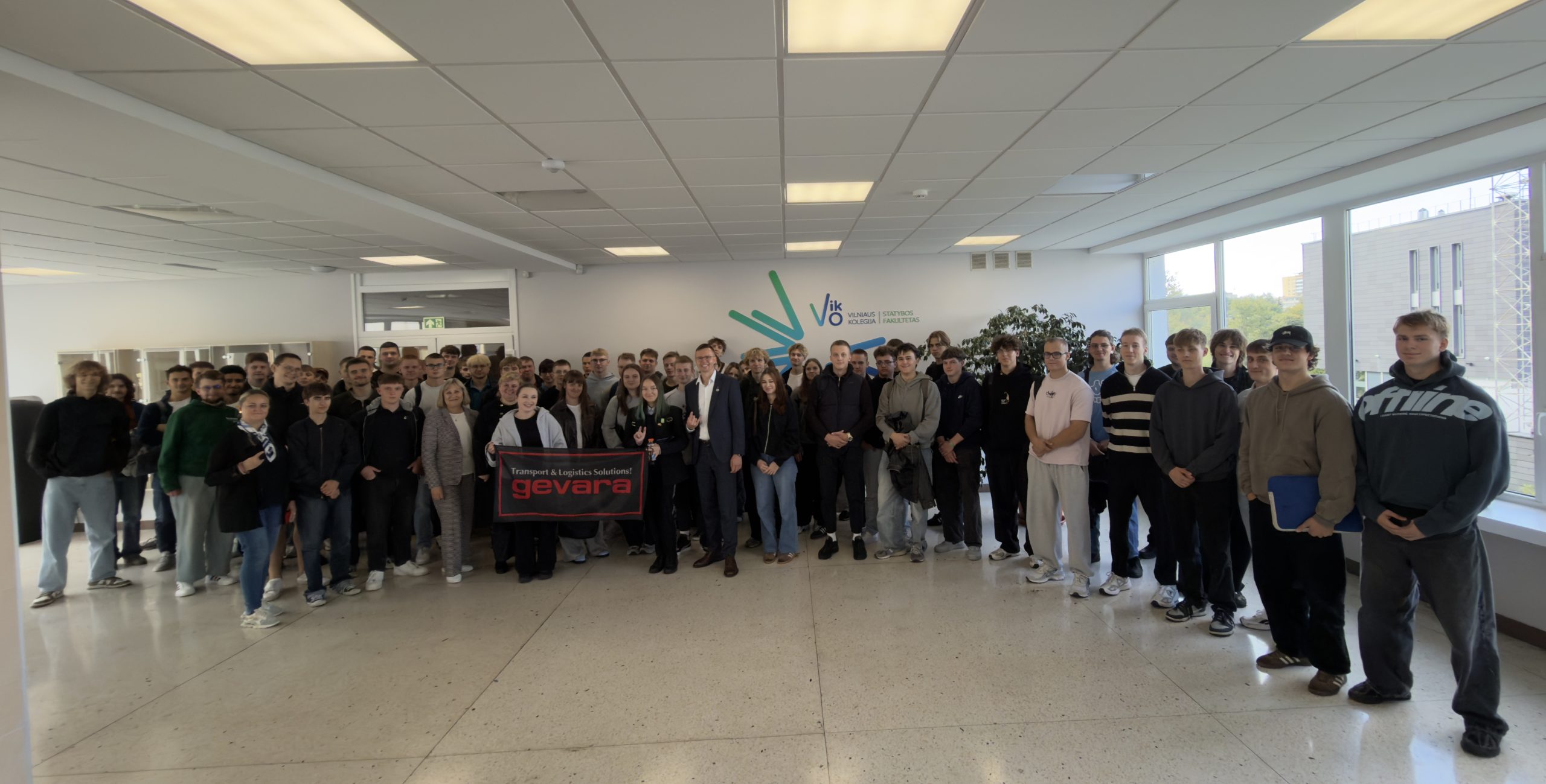
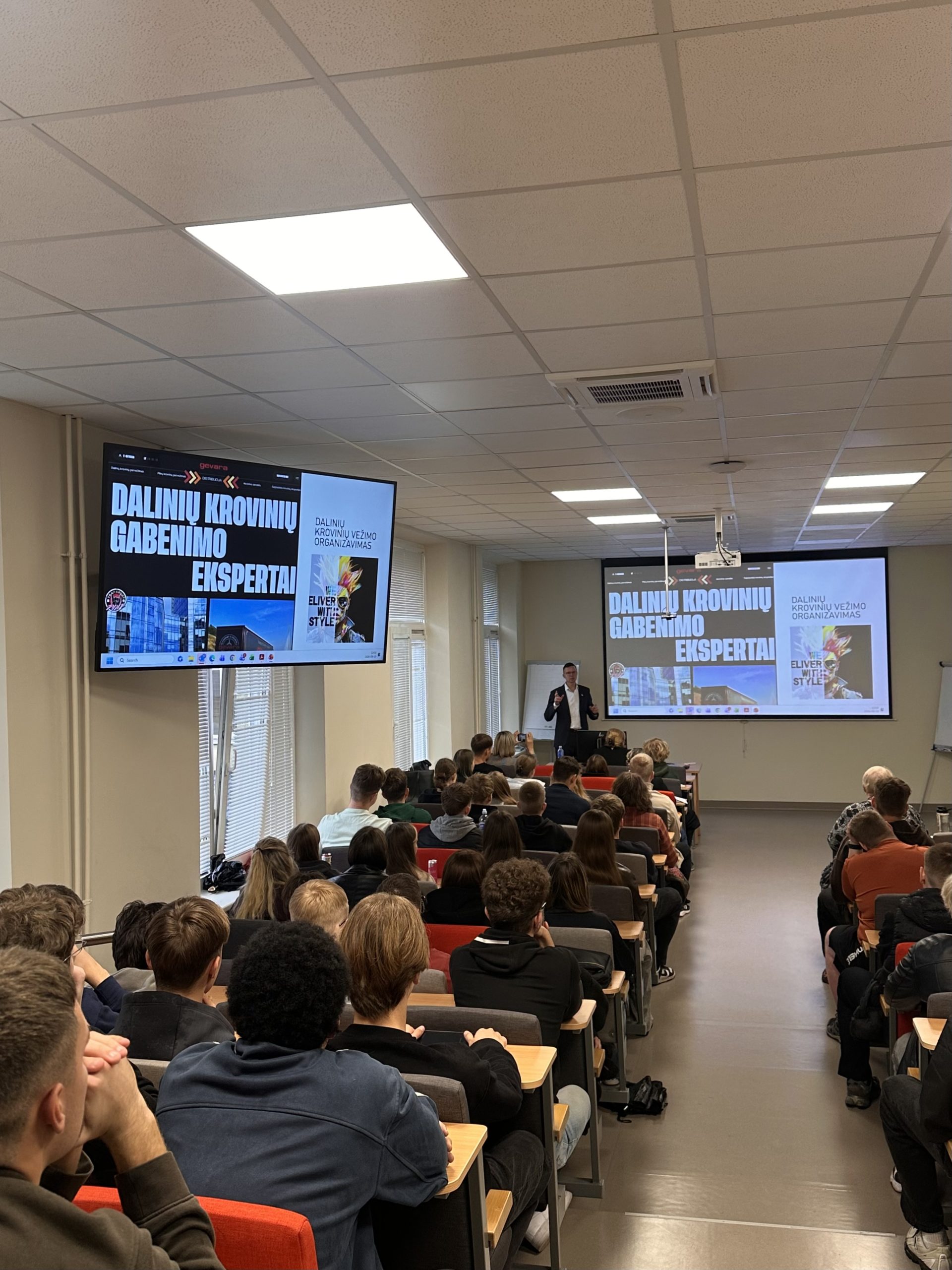
Šarūnas Stoka, Head of the Sales Department at UAB ‘Gevara’, delivered a lecture entitled ‘Specifics of organising groupage freight transport at UAB ‘Gevara’’ to students in the TL26A, TL26B and TL26S groups. During the lecture, students learnt about the specifics of organising groupage freight transport, the concept of a pallet and its significance in logistics processes, ‘Extra Mile’ services and their importance in delivering freight to the final recipient. The concept of the LDM (Loading Meter) and its application in calculating the space occupied by a load in a vehicle were also discussed. The internship participants learnt about import and export processes, the specific features of organising them, and the main stages of logistics processes. The lecture also covered the key performance indicators (KPIs) used to assess the quality and efficiency of transport and logistics processes. The types of cargo most commonly transported in groupage shipments were discussed, along with their specific characteristics and the requirements for their packaging and transport.
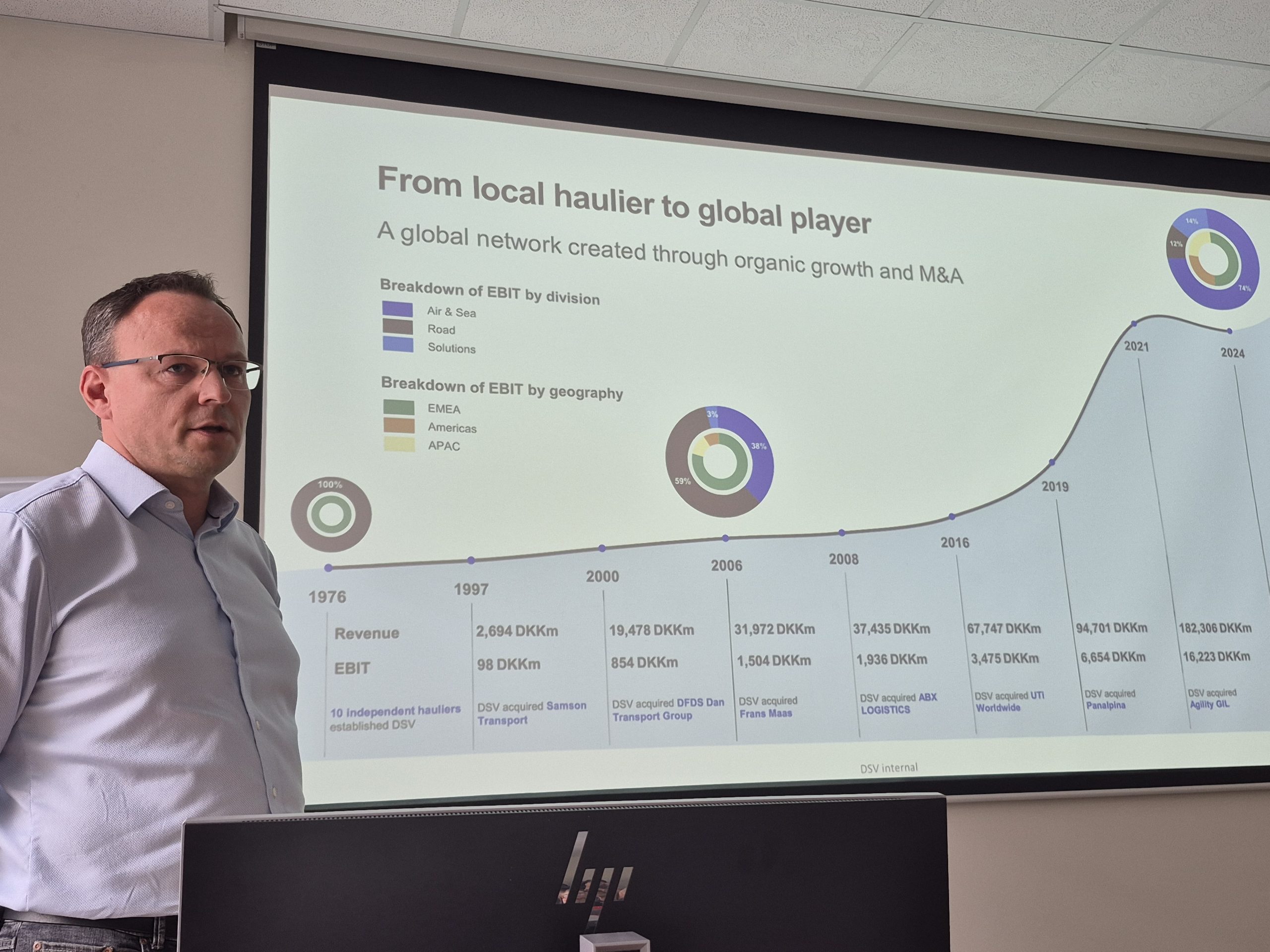
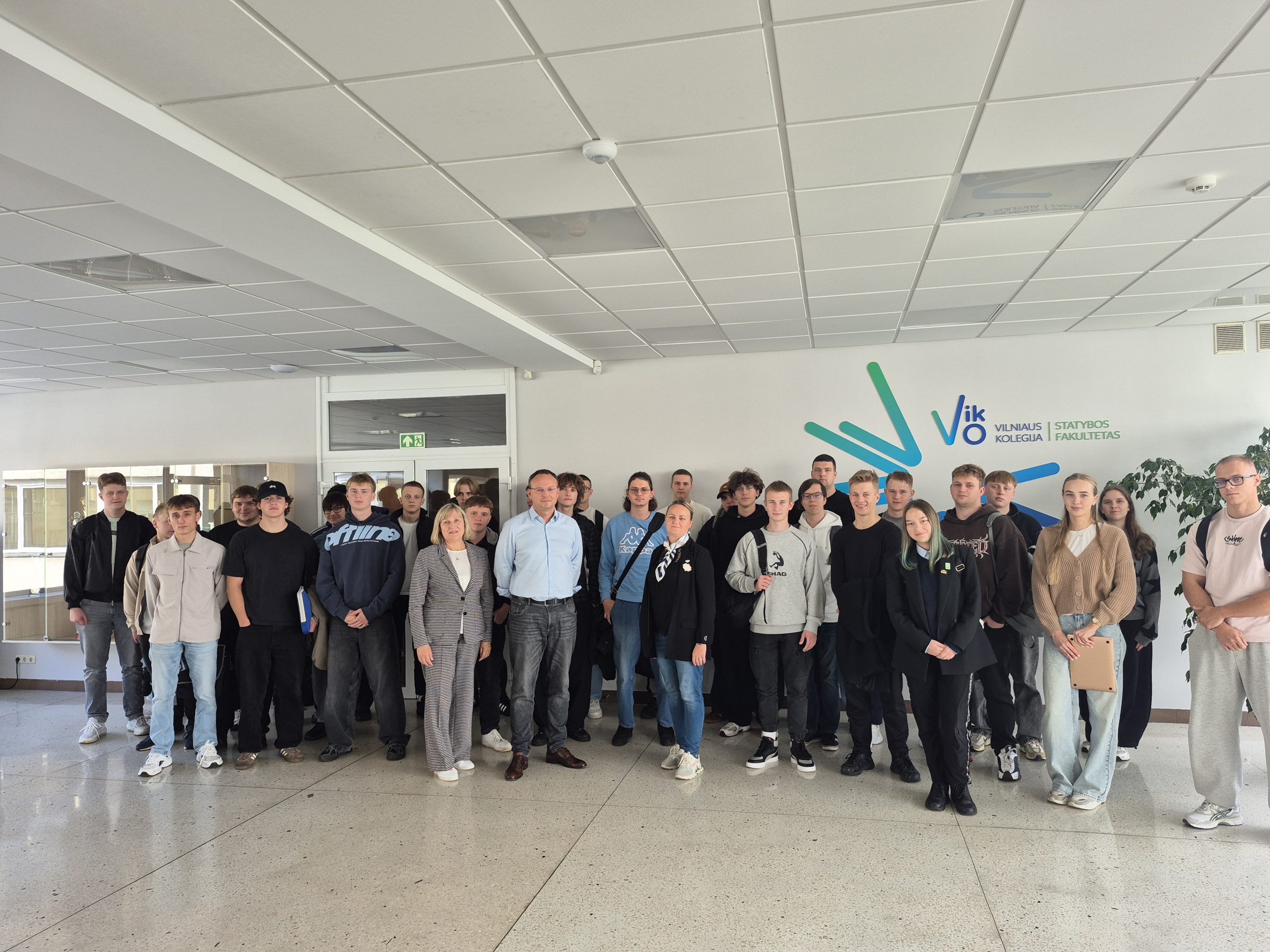
Later, students from the same groups took part in a meeting at which Petras Baltusevičius, Head of Southern Europe and the Baltic States at UAB ‘DSV Global Transport and Logistics’, presented the company’s history, the stages of its successful growth, the global ranking of the world’s largest transport and logistics companies, the company’s position within it, and its future prospects. The company representative emphasised that the company’s development is only possible when innovations are constantly introduced, data-driven decisions are made, and the company is actively involved in addressing the decarbonisation of the transport and logistics sector and other challenges. The students had the opportunity to ask questions and take part in the discussion.
We are grateful to our social partners for their cooperation and believe that these meetings will serve as a meaningful bridge between academic knowledge and real-world professional experience. Together with our partners, we are creating opportunities that inspire, encourage growth and help students step confidently into the future.